
16 November 2026
What World Alzheimer’s Month looked like across Anchor’s care homes
In this blog, Asa Johnson, Anchor’s National Resident Experience Manager, reflects on how care homes marked World Alzheimer’s Month through creativity, self-expression and shared experiences.
After the conclusion of World Alzheimer’s Month, as someone who works alongside people living with dementia every day, I have reflected on its lasting legacy and remain convinced that awareness is where everything begins.
Dementia touches families, friendships, and communities in ways that are far easier to face when they have been talked about openly, and a month set aside for exactly that gives us a valuable chance to reflect on what we have learned and what we want to carry forward.
During World Alzheimer’s Month, that conviction shaped much of what happened across Anchor’s care homes, from the creative activities our residents enjoyed, to the conversations we took into our local communities.
The scale and impact of dementia
There are an estimated 982,000 people living with dementia in the UK, and more than a third are managing the condition without ever having received a formal diagnosis. As we live longer, often with more complex health needs, that figure is projected to rise to around 1.4 million by 2040.
Behind those numbers are families, friends, and neighbours. Almost all of us will at some point know someone or love someone with dementia, affecting our own lives. It is a shared consideration, which is precisely why it deserves a more honest place in everyday conversation than it currently has.
What self-expression looks like in practice
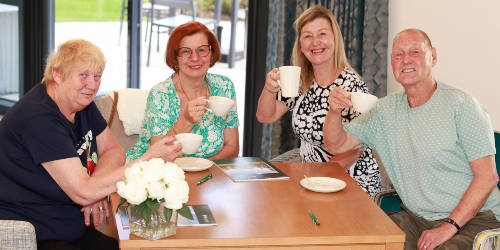
This year at Anchor we put a particular spotlight on creativity, linking our activities to National Arts in Care Homes Day to show that expression takes many forms, including music, sound, touch, colour, and movement. For anyone whose words may be harder to find, these offer other ways of sharing who they are, and the response from our homes was wonderful.
At Sandholme Fold in Halifax, Margaret created a beautiful piece of diamond artwork, and at The Manor House in Harrogate, Geoff has been sharing his poetry with friends. Residents at Moore Place in Surrey explored digital art, colleagues at Gills Top in Skipton joined residents for soap making, and at The Firs in Felixstowe therapeutic art offered another way for people to experience art through texture and touch. At Blackbrook House in Colchester, residents travelled to Flatford to see the landscapes that inspired painter John Constable.
Creativity also brought people together to help others. Residents at Silver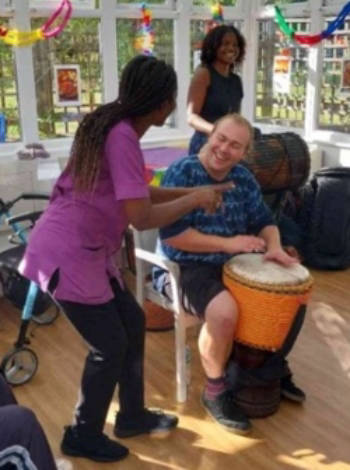 Court made welcome cards, while at The Manor House in Knaresborough residents made autumnal wreaths to raise money for the Happy Wanderers Ambulance Service. Elsewhere across Anchor there were African drumming workshops, dementia cafés with special guests, and Let’s Talk Dementia sessions taken out into the communities our homes belong to.
Who a person is remains long after a diagnosis. Many of our residents have spent their working lives as teachers, joiners, nurses, artists or bakers, and the skills, interests, and pride that came with those roles are still very much part of them.
Creative activity can give people a way to find that part of themselves again, whether that is a former joiner who enjoys working with their hands in a pottery session, a retired teacher sharing poetry with friends, or a lifelong singer joining a music session, and the most meaningful support helps each person carry on doing what they love in ways that still work for them.
Why the arts earn their place
Alzheimer’s Society highlights that art can give people living with dementia an outlet they might not otherwise have, particularly where speech or language has become more difficult, and that what someone creates can help those around them understand how they are feeling.
Group activities such as writing poetry or crafting together can bring social and communication benefits simply through the company provided, and participatory arts can strengthen the relationship between a person and those who care for them, while building a wider sense of community.
That reflects what we see across our homes every day. Creative activity gives people a chance to express themselves, share an experience, connect with others and keep doing something they enjoy, and for families it is often a welcome opportunity to spend time together and try something new that they might not otherwise have had the chance to do, such as soap making. One of our care homes has even taken this a step further, and now runs a soap business of its own, with the scents and artwork designed and curated by the residents themselves!
Looking ahead
The month may be over, but the work is not seasonal. The curiosity about what makes each person who they are, and the willingness to talk honestly about dementia, matter just as much in February as they do in September. I and my colleagues across Anchor will keep bringing both into our homes and communities throughout the year.
Asa Johnson is Anchor’s National Resident Experience Manager
Find out more about how we support residents living with dementia here.