- Home
- Existing residents
- Gas safety and heating
Resident guidance & Policy information: All residents - Last updated 20 April 2026
Gas safety and heating
Your home may include gas appliances that help keep you warm and comfortable. This page explains how to use them safely, what to look out for and when to get in touch for support. You can also download our Gas and Heating Safety Policy.
On this page you’ll find:
- Anchor's Gas and Heating Safety Policy
- Advice on using your boiler and heating safely
- Warning signs that there may be a problem with a gas appliance – and what to do
- What to do if you smell gas or suspect a gas leak
- Carbon monoxide (CO) safety
- Cooker safety – installation, contractors and certificates
- How annual gas safety checks are carried out
- How we deal with gas safety in empty homes
- Using extra heaters in your home
- What to do if your heating or hot water stops working
- Safety certification for solid fuel or oil-fired appliances
- Annual checks for homes with renewable heating systems
- Rules on wood burning stoves and open fires
- How to get more help or advice about your gas appliances or heating
- Free advice on energy costs and running expenses
Anchor's Gas and Heating Safety Policy
Our policy outlines our approach to gas and heating safety across our properties.
Using your boiler and heating safely
- Follow the instructions for your boiler and heating controls
- Report any changes, such as unusual noises, leaks or low boiler pressure
- Never try to repair or disconnect gas appliances yourself
- Keep vents and flues clear so your boiler can work safely.
Warning signs that there may be a problem with a gas appliance – and what to do
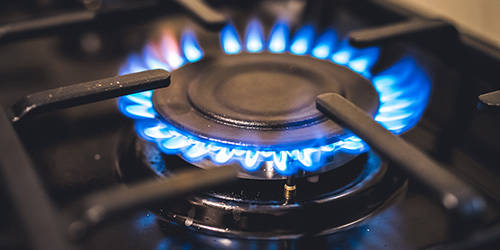
If you notice yellow or brown stains around an appliance, see a yellow flame instead of a blue one on your cooker or heater, or your pilot light keeps going out, switch the appliance off. These signs can mean the appliance is unsafe and needs repairing or replacing.
- If the appliance is Anchor’s responsibility, contact your location manager or the Customer Experience Hub on 0800 731 2020 straight away
- If the appliance is your responsibility, speak to a qualified gas engineer without delay.
What to do if you smell gas or suspect a gas leak
- Don’t use electrical switches, lights or the emergency pull cord near the leak – they can cause sparks
- Don’t strike matches or use naked flames
- Put out cigarettes or smoking materials
- If it’s safe and you know how, switch off the gas supply and open a window to ventilate the area
- Leave your home, go somewhere safe, and then contact either:
- your location manager
- Anchor On Call using a pull cord in another flat or shared area
- Call National Gas Emergency Service on 0800 111 999.
Carbon monoxide (CO) safety
If Anchor is responsible for your gas appliances, we’ll provide a CO alarm. If your appliances are your responsibility, we recommend fitting a CO alarm in your home.
A CO alarm works just like a smoke alarm and will alert you if carbon monoxide is present. Test it regularly following the manufacturer’s instructions.
If your CO alarm sounds, move everyone to fresh air immediately and seek help from your location manager or Anchor On Call.
Cooker safety – installation, contractors and certificates
All cookers must be fitted or removed by a qualified contractor.
- Electric cookers: if fixed wired, must be fitted by a contractor registered with NICEIC (National Inspection Council for Electrical Installation Contracting), NAPIT (National Association of Professional Inspectors and Testers), Benchmark, BSI (British Standards Institution), BESCA (Building Engineering Services Competence Assessment Ltd), Certsure, OFTEC (Oil Firing Technical Association) or Stroma. If it comes with a plug, anyone may install it
- Gas cookers: must be fitted by a Gas Safe registered contractor.
Please tell your location manager if you plan to fit a new cooker. When the work is finished, the contractor will give you a certificate, (unless it is a cooker with an electric plug):
- For electric cookers this is a Minor Electrical Installation Works Certificate
- For gas cookers this is a Declaration of Safety Certificate
We recommend that, if choosing a gas cooker, you choose one that has a flame safety device, which automatically cuts off the gas if there’s no flame.
How annual gas safety checks are carried out
If you have a gas boiler or gas appliances that Anchor is responsible for, we’ll arrange for a Gas Safe registered engineer to check it every 12 months. After each check, you’ll receive a safety certificate (LGSR – Landlord Gas Safety Record).
Only contractors with the right statutory certification (Gas Safe, OFTEC (Oil Firing Technical Association) or HETAS (Heating Equipment and Testing Approval Scheme)) will carry out these checks and any repairs.
We’ll let you know when your safety check is due. If the date or time doesn’t work for you, please tell your location manager as soon as possible so we can rearrange it and avoid a missed visit. These visits usually take between 30 and 60 minutes (depending on the number of appliances).
If you have gas appliances that aren’t serviced by Anchor, we strongly recommend you arrange an annual service. Any service you arrange must be carried out by a Gas Safe registered contractor. Always ask to see their Gas Safe registration certificate.
How we deal with gas safety in empty homes
Where Anchor is responsible, we’ll make gas supplies safe when a property becomes empty. We also carry out regular checks on long-term empty properties to make sure gas supplies remain safely disconnected.
Using extra heaters in your home
Where Anchor is responsible for providing your heating, if you choose to use extra heaters, this will be at your own cost. Any additional heaters must be:
- Thermostatic controlled convector heaters, or
- Oil filled radiators.
Please don’t use radiant electric fires or mobile gas heaters, as they can be unsafe. Do not dry clothes on electric/gas heaters as this is a fire hazard.
What to do if your heating or hot water stops working
If Anchor is responsible for your heating and hot water, and either stops working, please tell your location manager or contact the Customer Experience Hub on 0800 731 2020 straight away. If needed, we’ll provide temporary heaters until repairs are completed.
Safety certificates for solid fuel or oil-fired appliances
Where Anchor is responsible, all domestic properties with solid fuel or oil‑fired appliances must have valid safety certification (HETAS or OFTEC). A copy of the certificate will be shared with the resident.
Annual checks for homes with renewable heating systems
We will annually inspect any homes with air source, ground source or solar thermal systems.
Rules on woodburning stoves and open fires
Anchor doesn’t install, or allow residents to install, wood‑burning stoves or open fires. Any unauthorised installations will be removed at the resident’s cost.
Need help or advice?
If you’re worried about gas appliances or your heating, please speak to your location manager or contact the Customer Experience Hub on 0800 731 2020.
Free advice on energy costs and running expenses
If you are worried about energy costs or running expenses, please contact our Be Wise team on 0800 023 4477 or [email protected] who can offer advice and support.
This website uses cookies which track activity so that you get the best possible experience. By continuing to use this website we will assume you are happy and cookies will be set. You can change your cookie settings at any time.