- Home
- Existing residents
- Lift safety
Resident guidance & Policy information: All residents - Last updated 20 April 2026
Lift safety
Lifts are shared spaces used by many residents every day. A malfunctioning lift is more than just an inconvenience. It can affect your daily activities and become a challenge if you have mobility needs. Using and managing lifts safely helps prevent injuries, breakdowns and long periods without lift access.
This page explains how Anchor maintains the lifts in our properties, what you can do to help keep lifts moving safely, and what to do if a lift breaks down.
On this page you’ll find:
- Anchor’s Lift and Lifting Equipment Policy
- How Anchor keeps your lift working
- How you can help keep lifts working safely
- Fire safety and lifts
- What to do if the lift stops or breaks down
- Stairlifts, aids and adaptations
- How to get more help or advice on lift safety
Anchor’s Lift and Lifting Equipment Policy
Our policy outlines our approach to lift safety and maintenance across our properties.
Lifts and Lifting Equipment Policy
How Anchor keeps your lift working
We are responsible for making sure lifts (and lifting equipment that belong to Anchor e.g. stairlifts, hoists etc.) are safe and properly managed. This includes:
- Regular servicing and inspections, in line with regulatory guidance, to make sure lifts meet required safety standards
- Ensuring repairs are carried out when faults or breakdowns are reported
- Ensuring all repairs, servicing and maintenance are carried out by qualified contractors
- Having emergency arrangements in place if someone becomes trapped in a lift
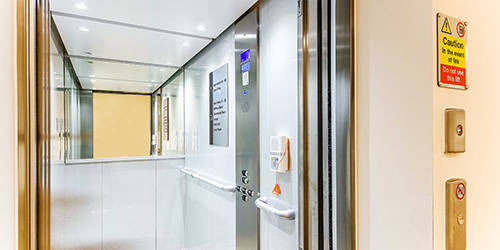
- Ensuring clear safety signage is visible inside and near lifts, including weight limits and emergency contact details
- Keeping residents informed about planned maintenance, repairs or long-term lift outages
- Considering reasonable adjustments for residents with disabilities or mobility needs, especially during lift breakdowns.
How you can help keep lifts working safely
- Do not exceed maximum passenger/load limits
- It’s important not to use the lifts for moving furniture, as this can cause unintentional damage to the lift's doors and interior. Items of furniture can add up in weight quickly too. Many companies will be happy to provide delivery of furniture using stairs for access
- Scooters should not be used in lifts
- Wait for the lift to stop completely and for doors to open fully before entering or leaving.
- Do not try and obstruct the doors from closing. Do not block the doors with things like wheelchairs, prams, bags etc.
- Keep children close and hold their hands inside the lift - they should not be left unattended
- Do not force the doors to open or close
- Do not jump, push or play inside the lift.
Using a scooter in the lift
For residents' safety, and to prevent damage caused by excessive weight, we would recommend that scooter users do not use scooters in lifts. Where it is necessary for mobility reasons then:
- Residents not using a scooter must be given priority to use the lift over scooter users
- Only one scooter and scooter rider can use the lift at any time
- No other residents should use the lift at the same time, to ensure weight limits are not exceeded and to avoid injury or damage
- Scooters must be positioned centrally (both width and depth) within the lift
- Scooters should be driven forwards into the lift and reversed out.
Fire safety and lifts
- Do not use lifts if there is a fire or fire alarm sounding, unless the lift is clearly marked as a fire evacuation lift and you have been told to use it
- Use the stairs where possible during emergencies.
What to do if the lift stops or breaks down
- Stay calm and try and ensure those who are with you do the same. Wait for assistance
- Use the alarm button or intercom inside the lift to contact help – this will connect you to Anchor on Call or the onsite care team (where there is one)
- Follow the instructions given by the operator
- Do not try to force the doors open or climb out of the lift
- If the person trapped is experiencing significant distress or a medical emergency, the Local Fire and Rescue Service will be called.
Stairlifts, aids and adaptations
Reasonable requests for adaptations, including the installation of stairlifts, will be considered in accordance with our Aids and Adaptations and Home Improvements Policies.
Once the guarantee or defects period has ended, Anchor will assume responsibility for the repair and maintenance of stairlifts located in communal areas. Where a stairlift in a communal area has been self-funded by a resident, Anchor will manage its maintenance, with all associated costs recharged to the resident. The resident will be responsible for removing the stairlift when they move out of the location unless another resident is willing to take over responsibility for the stairlift.
Stairlifts installed solely for the benefit of an individual resident (or a member of their household) and located inside the resident’s home will remain the sole responsibility of that resident. Again, the resident would be responsible for removing the stairlift unless the incoming resident was willing to take responsibility for it.
Need help or advice?
If you have any concerns about the lift at your location (including the lift not working or getting stuck, the doors not opening or closing properly, strange noises, shaking, sudden stops, or broken buttons/lights/mirrors) please talk to your location manager or contact the Customer Experience Hub on 0800 731 2020.
If you have mobility needs, health concerns, or require adjustments related to lift use, contact us to discuss available support or reasonable adjustments.
This website uses cookies which track activity so that you get the best possible experience. By continuing to use this website we will assume you are happy and cookies will be set. You can change your cookie settings at any time.