
Last updated 10 June 2026
Expert’s guide to choosing a care home
Choosing a care home is an important decision, and it’s completely normal to have questions or mixed emotions.
You might be starting to explore options yourself, searching on behalf of a parent or partner, or looking for guidance after a recommendation from a friend or health professional.
 Whatever your starting point, this guide will walk you through every step. We’ll answer the most frequent questions around moving to a care home, including those around funding and costs, alongside practical, reassuring advice to help you feel confident in your decision.
In this guide you’ll find:
- Understanding your care needs
- Different types of care home explained
- Understanding care home fees and funding
- How to find a care home
- How to check the quality of a care home
- How to arrange a care home visit
- Questions to ask when visiting a care home
- How to involve loved ones in the decision
- What happens once I’ve chosen a care home?
- Next steps and moving
- Choosing a care home: Our top resources
- Finding a care home with Anchor
Understanding your care needs
Before you can find the right home, it helps to understand what support you or a loved one needs. Think about daily life. Are certain tasks becoming more difficult?
- Dressing and washing.
- Cooking, cleaning, and other household chores.
- Getting around the house.
- Managing long-term health conditions.
- Getting out and about.
- Maintaining social connection.
If so, a care home might be the right choice.
Getting a Care Needs Assessment
Once you’ve thought about where you might need help, the next practical step can be to get a Care Needs Assessment.
This is a free assessment from your local council, where a trained professional will discuss yours or your loved one’s needs, work out what support is most suitable and put forward services that can meet those needs in a written document called a Care Plan. A Care Needs Assessment is also an important step in accessing any potential council funding to help pay for care and support.
Helpful resources:
- NHS: Getting a care needs assessment
- What is a care needs assessment?
- Is your current home still suitable?
Different types of care home explained
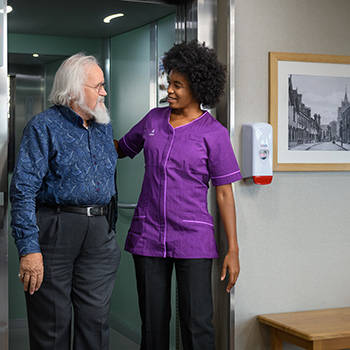 Understanding the different types of care home available is important to filtering your search.
Residential care homes
A residential care home provides a safe, social environment for those who need 24/7 support with daily tasks and are no longer able to live independently in their own home.
Staff will be on hand to help with everyday tasks like washing, dressing, mobility, meals and managing medication, but will also focus on supporting residents to continue doing the things they can and maintaining their independence. Most homes have strong ties with local GPs and district nurses who will visit regularly to provide support.
Nursing homes
A nursing home provides the same support as a residential home, but with registered nurses on-site 24/7. This is ideal for people with complex or long-term health conditions who may require specialist medical care.
While Anchor does not operate many nursing homes, we recognise that they are an important option, and if we don’t have this type of home in your preferred area we can signpost you to options if needed.
Dementia care homes
Dementia care homes offer tailored support for people living with dementia, often with environments that feel safe, calm, and easy to navigate for those living with the condition.
At Anchor, our residential care homes provide tailored dementia care, with support from a team trained in dementia care best practice. If you’d like more information on how our homes support residents living with dementia, then get in touch with our friendly team who will be happy to help.
Helpful resources
A note on Extra Care Housing/Assisted Living
 You may have heard about properties described as “Extra Care Housing”, “Housing with Extra Care” or “Assisted Living”. This is a type of housing designed for people who can live independently, with occasional care and support.
Self-contained flats are usually complemented by a range of on-site facilities in a fully accessible setting, and an on-site team of professionals offering specific services such as catering, personal care and wellbeing services.
It’s worth considering both care homes and extra care housing to see which is most appropriate for your needs. Anchor offer both these options and we’ll be happy to answer any questions.
Understanding care home fees and funding
Funding is one of the biggest areas of concern people might have about moving into a care home but help towards paying care home fees can be available depending on your circumstances.
How much do care homes cost?
Fees vary depending on who operates a care home, where it is in the country, and the type of care needed.
At Anchor, our private residential care home fees currently (2026-2027) range from starting figures of £1,022 to £2,190 per week a week.
We know that care costs can feel overwhelming, however it is important to remember what they include and pay for. For example, in an Anchor care home our weekly care home charge covers almost all living expenses and includes: 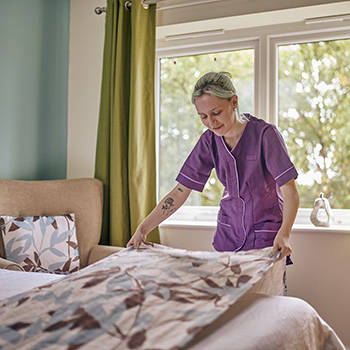
- cost of round the clock personal care and support
- accommodation - your own personal bedroom and a wide range of well-maintained accessible communal facilities and gardens
- utilities e.g. heating and light
- all resident catering, meals, snacks and drinks
- laundry undertaken on the premises
- housekeeping services
- television licence, for your use of digital or satellite television in your room for residents age 75 and over (residents under age 75 will need to pay an annual charge set by TV Licensing to join the shared TV licence).
Some people also find it useful to consider all the costs incurred living in your own home, unsupported, or to know how these fees break down on an hourly basis. The current (2026-2027) Anchor private residential care home fee ranges given above work out as from £6.08 to £13.04 an hour.
Any care home you talk to should be able to provide full details of what is included in their fees and clearly outline anything not included or at an additional cost.
What help is available for care home fees?
In England, the government sets national limits that determine eligibility for funding assistance. Currently (2026-2027) how you pay for your care depends on your total income, savings and property (assets):
- If your assets are above £23,250, then you will pay for your care in full.
- If your assets are between £14,250 and £23,250, then the council will pay part of your fees, and you will pay the rest.
- If your assets are below £14,250, then the council will pay most or all your fees.
Accessing Local Authority Funding
If you think you may be eligible for funding assistance towards the cost of care, contact your local council and request two assessments:
- A Care Needs Assessment, to officially confirm that you need care.
- A Financial Assessment (Means Test), to find out if the council will help to pay for your care.
As part of the Financial Assessment the council will look at the total value of your assets, including earnings, savings, property, pensions and benefits.
NHS Continuing Healthcare
People with significant and complex medical needs may qualify for NHS Continuing Healthcare funding. This is separate to local authority funding, and if eligible the NHS will cover all care home costs in full. If you think you may qualify for this, talk to your GP to find out more.
Our guide to care home fees
For a comprehensive guide to all aspects of funding, view Anchor’s guide to care home fees.
Helpful resources
- NHS: Financial assessment (means test) for social care
- Are next of kin responsible for care home fees?
How to find a care home
 Once you know the type of care you need and how this will be funded, you can start your search. The following are good routes to help with your search:
- Local authorities provide a list of all homes within their area.
- Directory websites hosted by independent providers let you filter homes by area and care type and read reviews.
- Family and friends may be able to share recommendations based on their own experience, or people they know.
- Many care homes, including Anchor, run cafes and community events, providing a relaxed first look at daily life.
- Local solicitors often host free workshops on planning for care - your local authority may be able to provide details of any within your area.
- The Anchor website contains a simple search tool allowing you to view Anchor homes in your area.
- Call Anchor’s friendly team on 0800 731 2020, and ask to speak to an advisor about care homes in your area.
Things to consider when researching
When you have a few potential homes in mind, think about the following when doing your initial research and before arranging a visit:
- Location - Do you want to stay in an area you know well or move closer to loved ones?
- Transport and parking - Will friends and family be able to visit easily?
- Care needs - Does the home offer the right type of care, and would it still be right for you or your loved one if their needs changed in future? Anchor homes, for example, work closely with district nursing teams to ensure residents can continue living comfortably with us even as needs evolve.
- Facilities - Does the home offer the right level of facilities, activities, and amenities for you?
Helpful resources
How to check the quality of a care home
When researching homes, the following can help give an idea of how safe, well run, and welcoming they are:
 Reviews and testimonials
Feedback from residents and families can provide great insight into life at a particular home. Good places to look for reviews include:
- Carehome.co.uk, a directory website with reviews for most UK care operators.
- Google reviews, where you can find reviews by searching for the name of a home within the map section.
- Social media pages (e.g. Facebook, Instagram), where you can see how a home engages with the public.
Note: At Anchor each of our care homes have their own Facebook page where the care team and residents share updates on daily life, pictures and videos with their followers, including friends and family. You can find a link to these profiles on each home’s website page.
CQC (Care Quality Commission) reports
The Care Quality Commission (CQC) is the independent regulator of health and social care in England. They inspect homes to check they are safe, effective, and well led, publishing detailed reports on their website.
The CQC will give one of the following ratings to homes, depending on what they find when they visit:
- Outstanding: The best score that a home can get, with all aspects of the service performing above expectations.
- Good: The care home meets high standards across the board.
- Requires Improvement: The care home has at least one area where it can improve and has guidance from the CQC on how to do this.
- Inadequate: The care home isn’t providing an acceptable service.
A note on “Requires Improvement”
A “requires improvement” rating can sometimes make people nervous. However, context matters, and issues may have been addressed since the last inspection.
If you like a home but it has a “requires improvement” rating, we suggest looking closely at the date of the inspection and contacting them to ask questions such as:
- What actions have you taken to address issues raised within the last CQC report?
- Can you share any recent or planned improvements?
Helpful resources
- Anchor’s guide to understanding CQC ratings
- CQC: Our ratings and scores
- CQC: Find a report on a care home
How to arrange a care home visit
 Once you’ve narrowed down a list, arranging a visit is the best way to get a sense of the personality of a home and whether it will feel right for you:
- Book a visit with the home online, or over the phone. Providing key details ahead of the visit can help the home understand what you’re looking for and ensure that a member of the team is available to support you.
- Drop in visits are welcomed by some homes and can be a great way to get a feel for day-to-day life.
- Virtual tours are offered by some, which can be a good option if you are looking for homes outside of your current area, if you have time constraints or travelling might be difficult. This may be a pre-recorded tour or a video call with a member of the care home team.
Top tip: Arrange for friends or family to come to the visit, both for support and to help provide a second opinion.
Visiting a care home is one of the most important steps in deciding whether it’s the right place for you or your loved one. For more advice on how to prepare for a visit and make the most of your time on a care home tour, read our guide to visiting a care home for the first time.
Questions to ask when visiting a care home
When visiting a care home, going prepared with a few key questions can help you to make a decision that you’ll be confident in.
Our care home selection checklist provides a comprehensive list of things ask and look for - key things include:
Key questions about care and support
- What types of care do you offer?
- What is the staff to resident ratio?
- How is medication managed?
- How do you build care plans?
- What is your percentage of agency staff?
Note: Lots of permanent staff can show that a home is able build strong relationships with residents. Most care homes will need to employ agency staff periodically to ensure resident wellbeing and safety. At Anchor, we focus on continuity of care, and our homes try and use the same agency staff when we require additional support.
Key questions about fees
- What is the weekly fee and what does this include?
- Are there additional charges for things like hairdressing or outings?
- What happens if my financial situation changes?
Key questions about facilities and daily life
- What will a private room include?
- Can residents bring their own furniture?
- Does the home allow pets?
- What does a typical day look like?
- How do you support dietary, religious, or cultural preferences?
- What are the visiting arrangements?
Things to look for during your visit
 Bring a checklist so you can compare homes fairly. Key things to look for include:
- Staff - Are the staff friendly? How do the staff treat you as a visitor?
- Residents - Do residents seem relaxed and comfortable?
- Atmosphere of the home - Is the home clean, calm, and welcoming?
- Facilities - Does the home have facilities like hairdressers, cinema rooms, or onsite restaurants? What is the outside space like? Do the facilities seem well used by current residents?
- Activities - Are meaningful hobbies and social events taking place?
Helpful resources
- Print and take our care home selection checklist when you visit.
- Anchor’s guide to visiting a care home for the first time
How to involve loved ones in the decision
Loved ones can offer valuable support when choosing a care home - finding the right care home is a big decision and a lot for one person to do on their own. Here are a few ways to involve them in the process:
Discuss the decision
Have an honest conversation about how moving to a care home could be the right decision. Talk about the daily routines that matter to you and how life could be easier with more support, the challenges being faced as you see them, and how everyday life could be more comfortable. This can help everyone understand why the move could be a positive next step.
Research homes together
Look at websites and reviews together to keep family and friends involved in the search. Ask friends and family to do their own research too and see if they have their own recommendations.
Visit homes together
We’d encourage everyone to visit homes with someone else. Loved ones can provide an extra pair of eyes and ears as well as a different point of view, noticing things that you might miss and that may help you reflect on the visit later.
Arrange a short respite stay
Some homes are able to offer short respite stays, which can help you to get a feel for life in a home. Not all homes will be able to accommodate trial stays, so it’s best to ask early in the process just to make sure.
Helpful resources
- Starting difficult conversations
- How to find a care home that’s right for you – thinking about what matters to you
- What to expect from a respite break
What happens once I’ve chosen a care home?
 Once you’ve chosen the home that feels right and they have a vacancy, it’s time to get everything ready for the move:
- Arrange a pre-admission assessment. This is a detailed conversation with a member of the team designed to help the home understand all your care needs, and you as an individual. It’s an opportunity for you to get a better understanding of life in the home, ask any questions you might have, and work out whether the home is right for you. It will typically cover:
- Your care needs, and whether the home can meet these
- Dietary preferences and requirements
- Hobbies
- Likes, dislikes, and you as an individual
- Discuss the contract. A care home contract is a formal, legally binding agreement between the care home and whoever is paying for the service, setting out the rights and responsibilities of both parties. It is important you ensure everyone involved in this process understands what is included in fees, who will pay them and how, whether a top up is applicable, any important dates to be aware of and what paperwork needs to be filled in or signed.
- Work out your move in date. Moving may take from a few weeks to a few months based on funding, assessments, and room availability, and of course you may have other factors to consider such as family commitments or wanting to be settled ahead of important events, all of which you can discuss with the home.
- Let people know about the move:
- Family, friends and neighbours
- Your GP surgery
- Your local authority
- Banks, insurance companies, pension providers.
- Legal preparation. While not 100% necessary, now is a good time to make sure your will is up to date and that you have a Lasting Power of Attorney in place. This allows someone to make decisions on you or your loved one’s behalf should they no longer be able to do so, and there are two types to consider:
- Property & Financial, which arranges a person to manage finances such as care home fees.
- Health and Welfare, to allow someone to make decisions about care, medical treatment, and living location.
Helpful resources
Next steps and moving
Once you’ve chosen a home they will stay in touch to support you through the move. Here are a few things to consider that can help make moving in as smooth as possible:
- Continue to talk to staff about your or your loved ones preferred routines. Your new home will be looking forward to you joining their community and keen to get to know you, so share the things that matter to you and how you like to live your life.
- Making your room feel like your space. The home should be able to help you bring things like photographs, personal decoration, or even favourite furniture.
- Know you’ll be supported to settle in. The home will help you or your loved one meet staff, new neighbours, and settle in at a pace that’s comfortable.
Choosing a care home: Our top resources
Alongside this guide, the following trusted organisations can help you in your search:
- GP Surgeries can help advise you on the type of care that might suit you: https://www.nhs.uk/service-search/find-a-gp/
- Local Councils can provide details on homes within their area, and carry out free care and finance assessments: https://www.gov.uk/find-local-council
- The Care Quality Commission (CQC) have inspection reports and ratings for all homes in England: https://www.cqc.org.uk/
- Housing Care, operated by the Elderly Accommodation Counsel, offers useful information on care options: https://housingcare.org/
- Dementia UK provides advice on care options for families affected by dementia: https://www.dementiauk.org/
- Citizens Advice can help with questions around care funding and benefits: https://www.citizensadvice.org.uk/
 Finding a care home with Anchor
And of course, our own friendly team is always here to help. You can always get in touch with us for advice on the types of care we provide, homes we have in your area, and whether an Anchor care home could be right for you or a loved one.
Get in touch with Anchor:
- Find an Anchor care home near you: https://www.anchor.org.uk/care-homes
- Find the phone number of an Anchor home: https://www.anchor.org.uk/about-anchor/phonebook
- Contact our team: https://www.anchor.org.uk/contact-us